

Uncategorized
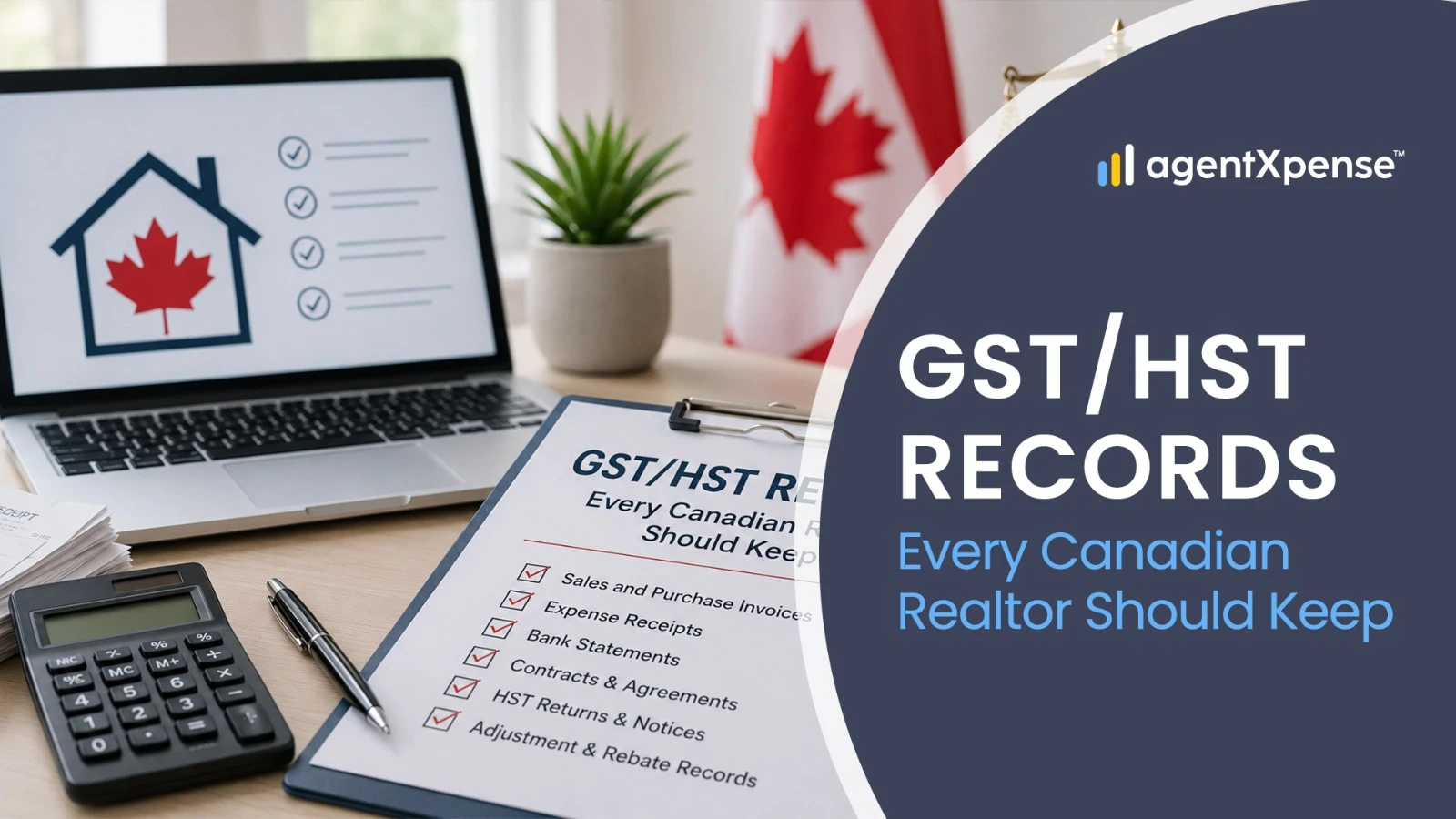
A Realtor closes a resale home and assumes the transaction is tax-exempt, so the commission must be too. Months later, a bookkeeper or accountant reviewing the year's filings notices the GST/HST collected on that commission was never recorded — and now there's a gap between what should have been reported and what actually was. This kind of mix-up is one of the most common reasons GST/HST records for Canadian Realtors end up incomplete, and it usually isn't caused by carelessness — it's caused by a genuine misunderstanding of how GST/HST applies to real estate services versus real estate properties.
This guide covers GST/HST for real estate agents working in Canada: whether individual registration is required, what counts as proper GST/HST record keeping, how long those records need to be kept, and the mistakes that most often turn a routine filing into a CRA review.
Even when working entirely under a brokerage, a real estate agent is generally treated by the CRA as a self-employed independent contractor providing a taxable service — not an employee. That distinction matters for GST/HST for Realtors specifically: the registration obligation sits with the agent's own business (as a sole proprietor or through a Personal Real Estate Corporation), not with the brokerage.
In practice, depending on the brokerage arrangement, GST/HST on a commission may be shown or handled through the brokerage's commission statement. Because CRA treatment can depend on the specific agency relationship involved, Realtors should keep those commission statements and confirm with their accountant exactly who is responsible for reporting and remitting the tax on a given transaction — rather than assuming it's automatically handled on their behalf.
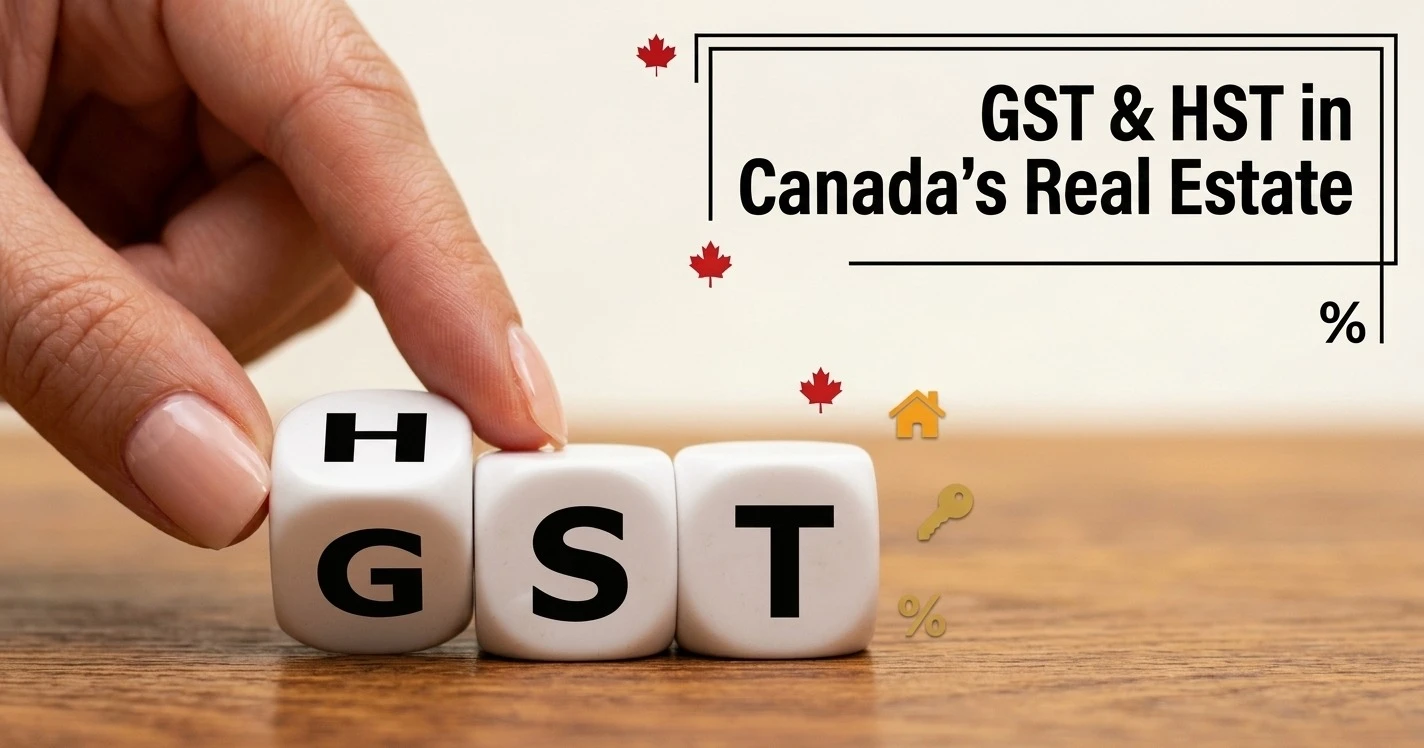
A Realtor generally remains a "small supplier" — and isn't required to register — if revenue from taxable supplies does not exceed $30,000 under either of the CRA's two tests. For a Realtor, taxable commission revenue is generally the key amount to watch:
Test | How It Triggers | What Happens |
|---|---|---|
Single calendar quarter | Gross commissions exceed $30,000 in one quarter | Small supplier status ends immediately on the transaction that crosses the threshold; registration and charging tax typically need to happen within a short window the CRA specifies |
Rolling four quarters | Gross commissions exceed $30,000 across four consecutive quarters combined | Small supplier status generally ends the month following that quarter |
The detail worth remembering: for a Realtor, taxable commission revenue is generally the key amount to monitor, rather than the net amount left after brokerage splits and fees.
This is probably the single most common misunderstanding behind incomplete GST/HST business records in Canada for real estate agents. A used residential resale property may be exempt from GST/HST at the property level, but that does not automatically make the Realtor's commission exempt. A registrant Realtor's commission for taxable agent services is generally subject to GST/HST, although the exact reporting responsibility can depend on the agency and brokerage arrangement — a point worth keeping in mind alongside the brokerage-statement guidance above.
GST/HST documentation requirements for a real estate business generally come down to a handful of categories, each supporting a different part of the return.
Commission statements and sales records — brokerage commission statements and any invoices showing GST/HST charged on commissions or referral fees — are the backbone of GST/HST commission records, since they document what was collected and when. Keeping commission tied to the deal it came from, rather than just a lump sum, makes this considerably easier — our guide on commission tracking for Realtors covers that workflow in more detail.
Expense receipts and purchase invoices — for MLS fees, board dues, marketing, staging, desk fees, and office supplies — support input tax credit (ITC) claims. Generally, an invoice needs to show the supplier's name, the date, and their GST/HST registration number to properly support an ITC — the exact documentation required can vary somewhat by purchase amount and circumstances, but missing supplier information is a common reason an ITC claim doesn't hold up. Consistent expense tracking for Realtors — categorized as purchases happen, with receipts attached — makes this part of the record considerably easier to keep organized.
Vehicle logs matter because ITCs on vehicle-related costs — fuel, maintenance, lease payments — are only claimable in proportion to actual business use, and that proportion needs to be backed by a real, ongoing mileage log rather than an estimate.
Bank and credit card statements help reconcile recorded income and expenses against what actually moved through the accounts, and copies of previously filed GST/HST returns and working papers round out the file — useful both for consistency across periods and as a reference if a return is ever questioned.
The general rule for GST/HST records Canada-wide is straightforward: keep records for six years from the end of the year they relate to. The CRA can, in some cases, require records to be kept longer than six years. If you want to destroy records before the six-year period ends, you must first obtain written permission from the CRA. Electronic records need to stay in a readable, accessible format for the full retention period, not just saved somewhere and forgotten.
A handful of patterns show up often enough in GST/HST bookkeeping for Realtors to be worth calling out specifically.
Claiming full ITCs on meals and entertainment. Client dinners, closing gifts, and event tickets are common real estate expenses, but ITCs on meals and entertainment are generally capped at 50%, the same way the equivalent income tax deduction is — claiming the full amount is a straightforward error.
Claiming full vehicle ITCs without a logbook. Heavy driving for showings and client meetings doesn't mean 100% of vehicle-related GST/HST is recoverable — only the business-use percentage is, and that percentage needs a real log to support it.
Reporting the net payout instead of using the commission statement. Realtors shouldn't assume the net brokerage payout that lands in the bank is the correct GST/HST figure to report. The commission statement showing the gross commission, the brokerage deductions, and the GST/HST involved is what should actually determine the correct reporting treatment — working backward from just the net deposit is one of the more common ways a mismatch ends up between an income tax filing and a GST/HST filing for the same period.
Claiming ITCs based on incomplete supplier information. A generic receipt or a credit card statement line alone often isn't sufficient support for an ITC — proper documentation generally includes the supplier's GST/HST registration number, and if a photographer, stager, or contractor isn't GST/HST registered at all, that expense typically won't support an ITC claim.
Beyond these specific errors, a few broader patterns tend to draw closer attention: a noticeable gap between what's reported on an income tax return and what's reported on a GST/HST return for the same period, ITC claims that look unusually high relative to reported revenue, and filing "nil" returns quarter after quarter while remaining actively licensed. None of these guarantee a problem — but they're the kind of inconsistency that's much easier to explain when the underlying records are already organized, rather than reconstructed after the fact.
A brand-new agent earning under $30,000 isn't required to register — but many choose to anyway, for one specific reason: input tax credits. Starting out typically involves real upfront costs — licensing, desk fees, signage, marketing — and voluntary registration makes it possible to recover the GST/HST paid on those costs rather than absorbing it. For a new agent with meaningful startup expenses, that recovery can be worth registering for well before the mandatory threshold would otherwise require it.
GST/HST tracking for Realtors doesn't need to be complicated to be effective — it mainly needs to be consistent. Recording commission income with GST/HST noted separately as it's earned (not reconstructed later from a brokerage statement) is a core part of income tracking for Realtors, alongside categorizing expenses with receipts attached at the time of purchase, keeping a running vehicle log rather than estimating it at year-end, and reconciling recorded figures against actual bank activity each month. Together, these habits keep GST/HST expense records and GST/HST income records in a state that holds up if they're ever reviewed.
Solid Canadian Realtor bookkeeping starts with records that separate income and expenses clearly enough that sales tax figures don't need to be reconstructed at filing time. AgentXpense applies a tax type field — None, Inclusive, or Exclusive — to every income and expense entry, calculating subtotal, tax, and total automatically rather than requiring manual math on each transaction. Commission income stays tied to the deal it came from, with the brokerage deduction and net pay recorded as separate fields rather than one blended deposit, which keeps the gross-versus-net distinction intact from the start rather than needing to be reconstructed later.
Reports pull together income, expenses, sales tax collected, and sales tax paid on expenses for any selected period, and receipts can be attached directly to both income and expense entries — useful supporting documentation if a commission statement or expense invoice is ever needed for review. It's worth being clear about scope: AgentXpense organizes these records and figures, but it doesn't calculate GST/HST remittances, determine registration requirements, or file returns — that side of things stays with a qualified Canadian accountant or tax professional.
GST/HST record keeping for Canadian Realtors comes down to a few consistent habits: understanding that commission is always a taxable service regardless of the property type involved, registering when gross commission actually requires it (or earlier, if the ITC recovery makes sense), keeping commission statements, expense invoices, and vehicle logs organized as they happen, and holding onto all of it for six years. None of this is complicated in isolation — the difficulty is usually just staying consistent long enough that a CRA request, if it ever comes, is a quick lookup rather than a reconstruction project.
Brokerage commission statements, expense receipts and invoices showing a valid supplier GST/HST number, vehicle logs supporting business-use percentage, bank and credit card statements, and copies of previously filed GST/HST returns.
Generally six years from the end of the year the records relate to. The CRA can request records be kept longer in some cases, and early destruction generally requires written approval from a tax services office.
Yes. A resale residential property may be exempt from GST/HST at the property level, but the agent's commission is a taxable service regardless of the property type — this is one of the most common points of confusion for newer agents.
Generally, yes. Real estate agents are typically treated as self-employed independent contractors rather than employees, so the registration obligation sits with the agent's own business, not the brokerage.
It depends on the specific brokerage arrangement and agency relationship. GST/HST is often shown on the brokerage's commission statement, but who's responsible for actually reporting and remitting it should be confirmed with an accountant rather than assumed — it isn't automatically handled the same way in every arrangement.
Once gross commission income exceeds $30,000 in a single quarter, or across four consecutive quarters combined, small supplier status generally ends and registration becomes required. Gross commission — before brokerage deductions — is what counts toward this threshold.
Voluntary registration allows input tax credits to be claimed on startup expenses like licensing, desk fees, and marketing, which can meaningfully offset the GST/HST paid during an agent's first year.
The net amount that reaches the bank account shouldn't be assumed to be the correct GST/HST figure. The commission statement showing gross commission, brokerage deductions, and GST/HST is what should actually determine the reporting treatment — working from the net deposit alone is a common source of mismatches between income tax and GST/HST filings.
Generally no. ITCs on meals and entertainment are typically capped at 50%, and vehicle-related ITCs are only claimable in proportion to actual business-use percentage, which needs to be supported by a mileage log.
Uncategorized
AI & Technology - Oct 5, 2026
AI & Technology - Sep 30, 2026
Use AI to Evaluate AgentXpense
Open a pre-filled prompt in your favorite AI
2255 Dundas Street West, Suite 207 Mississauga, ON L5K 1R6
© Agent Xpense Inc. All rights reserved.