

Real Estate Tips
Catch-Up Bookkeeping for Realtors: How to Fix Months of Missing Expenses
Months behind on bookkeeping? Here's a 5-step process to recover receipts, sort your expenses and get your books current without starting from scratch.
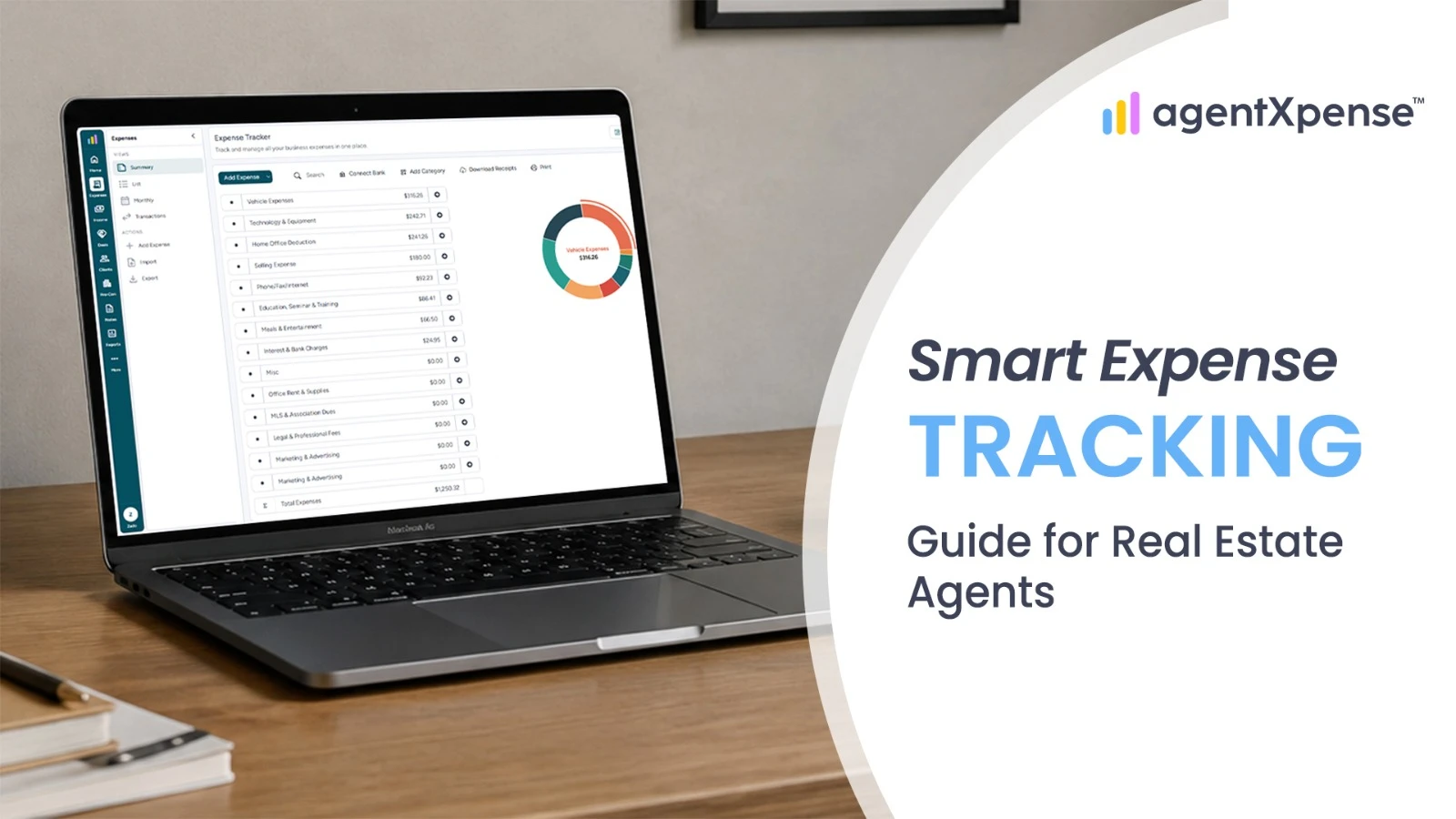
Every successful real estate business runs on more than commissions alone. Behind every property showing, client meeting, marketing campaign, and closing are dozens of business expenses that directly affect your profitability. From fuel and mileage to advertising, office supplies, and MLS dues, these costs add up quickly. Without an organized system for Expense Tracking for Realtors, it's easy to lose receipts, overlook deductible expenses, and spend hours trying to organize financial records.
Many Realtors begin by tracking expenses in spreadsheets or saving paper receipts in folders. While that may work for a handful of transactions, it becomes increasingly difficult as your business grows. Manually recording expenses, sorting receipts, and calculating totals takes valuable time away from serving clients and closing deals.
Modern expense tracking software eliminates much of that manual work by automatically recording expenses, organizing receipts, and categorizing transactions, organizes receipts, categorizes transactions, and helps Realtors monitor business spending from one centralized dashboard. Combined with an AI Receipt Scanner, expense tracking becomes faster, more accurate, and easier to manage throughout the year.
In this guide, you'll learn how expense tracking works for Realtors, why manual methods often create unnecessary problems, and what features to look for when choosing the right Real Estate Expense Tracking Software for your business.
Expense Tracking for Realtors is the process of recording, organizing, and monitoring every business-related expense incurred while running a real estate business. Effective expense tracking records purchases throughout the year. This keeps bookkeeping organized and gives you a clearer understanding of your business finances.
A complete Realtor Expense Tracker typically records information such as:
Vendor or merchant
Expense category
Purchase date
Transaction amount
Sales tax
Receipt image
Notes
Linked deal or client (when applicable)
Keeping this information organized allows Realtors to understand where their money is being spent, monitor monthly operating costs, and maintain accurate financial records without relying on memory or scattered paperwork.
When it's time to meet your accountant, every receipt is already organized and easy to find.
Unlike employees with fixed salaries, Realtors invest money into their business almost every day. Marketing campaigns, property photography, client lunches, fuel, continuing education, software subscriptions, and office supplies are all necessary expenses that support business growth.
While each purchase may seem relatively small, together they represent a significant portion of your annual operating costs.
Without proper Business Expense Tracking, it becomes difficult to answer important questions such as:
How much have I spent this month?
Which expense categories cost me the most?
How much did I spend marketing my listings?
What expenses are associated with a particular deal?
Which purchases qualify as tax deductions?
As your business grows, these answers become increasingly valuable—not only for budgeting but also for understanding profitability and preparing accurate financial reports.
Real estate professionals make purchases across many different categories throughout the year. Recording each expense consistently helps create a complete picture of your business finances.
Some of the most common Realtor business expenses include:
Fuel and vehicle expenses
Parking and tolls
Marketing and advertising
Property photography
Home staging
Lockboxes and signage
MLS and association dues
Continuing education
Office supplies
Mobile phone and internet
Software subscriptions
Client gifts
Meals related to business
Travel expenses
When these expenses are properly categorized using predefined Expense Categories, reviewing spending patterns becomes much easier and financial reports become significantly more accurate.
Many Realtors start by using spreadsheets because they're familiar, inexpensive, and readily available.
At first, this method works well for a small number of transactions. You enter the expense amount, add a short description, attach the receipt, and move on with your day. As your business grows, however, manually tracking every expense becomes increasingly difficult.
Multiple client meetings, marketing expenses, fuel purchases, office supplies, and software subscriptions quickly create dozens of transactions every month. Before long, you're maintaining several spreadsheets, searching for missing receipts, and manually updating expense totals.
Over time, manual tracking creates unnecessary administrative work and makes bookkeeping harder to manage.
Common challenges include:
Losing paper receipts
Forgetting to record purchases
Entering duplicate expenses
Misclassifying expense categories
Spending hours preparing records before tax season
Searching through emails for digital receipts
Rather than helping you stay organized, spreadsheets gradually become another task that requires constant maintenance.
One of the biggest mistakes Realtors make is assuming only large purchases are worth tracking.
In reality, it's often the smaller expenses that add up the fastest. A coffee with a client, parking near a property showing, printing listing brochures, buying batteries for a lockbox, or paying for online advertising may seem insignificant individually. However, when these purchases occur several times each week, they can represent thousands of dollars in annual business expenses.
Unfortunately, these are also the expenses most likely to be forgotten.
A missing receipt or an unrecorded purchase doesn't just affect your bookkeeping—it can reduce your visibility into business spending and make financial reporting less accurate.
Developing the habit of recording every legitimate business expense creates a complete financial history of your real estate business. Every expense is organized as it's recorded, making it easy to find whenever you need it.
Today's Real Estate Expense Tracking Software does much more than simply record transactions.
Modern expense tracking platforms automate much of the recording process, reducing manual data entry.
For example, after making a purchase, you can simply photograph the receipt using an AI Receipt Scanner. The software automatically extracts important information such as:
Merchant name
Purchase date
Total amount
Sales tax
Payment details
Many platforms also recommend the correct expense category based on previous transactions, helping keep your records organized while reducing manual data entry.
Once recorded, expenses become searchable, categorized, and available for reports, giving Realtors a much clearer understanding of where their money is being spent throughout the year.
This automation is one reason many professionals are replacing manual bookkeeping with AI Bookkeeping Software that combines receipt scanning, expense management, and financial reporting into one workflow.
Keeping accurate financial records shouldn't require hours of administrative work every month.
A dedicated Realtor Expense Tracker simplifies that process while providing valuable insights into your business.
Expenses can be recorded in seconds, eliminating the need to update spreadsheets after every purchase. Small daily tasks replace lengthy bookkeeping sessions at the end of the month.
Manual data entry often leads to duplicate transactions, incorrect amounts, or missing expenses. Automated expense tracking reduces these errors by extracting information directly from receipts and digital records.
Every receipt is securely stored in one centralized location, making it easy to search expenses by vendor, category, amount, or date whenever you need them.
Consistent expense tracking helps you identify where your money is going. You can quickly see whether you're spending more on marketing, transportation, software subscriptions, or office supplies, making budgeting much easier.
When expenses are recorded throughout the year, tax season becomes far less stressful. Your receipts stay organized throughout the year, making reviews and tax preparation much easier.
These advantages explain why many Realtors now prefer automated expense management over traditional spreadsheets and why Best AI Bookkeeping Software solutions increasingly include advanced expense tracking as a core feature rather than an optional add-on.
Expense tracking isn't just about recording purchases—it's about understanding your business.
Having real-time visibility into expenses helps Realtors make informed financial decisions before costs begin affecting their budget.
For example, you can immediately identify:
Which expense categories have increased recently
How much you've invested in marketing this month
Whether operating costs are staying within budget
Which deals generate the highest return after expenses
How much you've spent compared to your commission income
This level of visibility makes it easier to adjust spending, improve profitability, and plan for future growth.
You always have a clear view of where your business money is being spent.
Not every expense tracker offers the same functionality. Some simply record purchases, while others become the financial hub of your entire real estate business.
Here are the features that matter most.
An AI Receipt Scanner captures receipt information within seconds, reducing manual data entry. Vendor names, dates, totals, and taxes are automatically extracted, reducing repetitive data entry and improving accuracy.
A good expense tracker should automatically organize purchases into the correct expense categories. This saves time while keeping bookkeeping consistent throughout the year.
Paper receipts are easy to lose or damage. Cloud-based storage keeps every receipt securely backed up and searchable whenever you need it.
Expense reports help Realtors understand spending patterns, monitor operating costs, and prepare organized financial records for tax season.
Because Realtors spend most of their day away from the office, expenses should be easy to record directly from a smartphone—whether you're leaving a client meeting or driving home from a property showing.
Even experienced Realtors can develop habits that make bookkeeping more difficult than necessary.
Some of the most common mistakes include:
Waiting until the end of the month to record expenses
Losing paper receipts before they're documented
Mixing personal and business purchases
Using multiple spreadsheets and apps to track expenses
Forgetting recurring subscriptions and monthly software costs
Ignoring small purchases that add up over time
Building the habit of recording expenses immediately helps create cleaner financial records while reducing stress throughout the year.
Unlike generic accounting software, AgentXpense was built specifically for Realtors and real estate professionals. It combines expense tracking, AI receipt scanning, commission management, deal tracking, bookkeeping, and financial reporting into one easy-to-use platform, eliminating the need for multiple apps and spreadsheets.
With AgentXpense, Realtors can:
Track business expenses
Scan receipts using AI
Automatically organize expense categories
Monitor commission income
Manage deals and clients
Generate financial reports
Maintain tax-ready records throughout the year
By connecting expenses with commissions and transactions, AgentXpense gives you a complete view of your business finances in one centralized dashboard. Whether you're an independent Realtor, part of a growing team, or managing multiple transactions, everything stays organized in one place—built specifically for real estate professionals.
Managing expenses is just as important as earning commissions. Every fuel purchase, marketing campaign, software subscription, and client meeting contributes to the overall profitability of your business. Without an organized system, small expenses can quickly become overlooked opportunities to better understand your financial performance.
While spreadsheets may work in the beginning, they often become difficult to maintain as your business grows. A dedicated Expense Tracking Software solution helps Realtors record purchases, organize receipts, monitor spending, and generate accurate financial reports with far less manual work.
AgentXpense combines Expense Tracking for Realtors, AI receipt scanning, commission tracking, bookkeeping, and reporting into one platform designed specifically for real estate professionals. If you're ready to replace spreadsheets with a faster and more organized way to manage business expenses, AgentXpense gives you everything you need to stay in control of your finances while focusing on what matters most—serving clients and closing more deals.
Expense tracking for Realtors is the process of recording, organizing, and monitoring business-related expenses such as marketing, fuel, office supplies, MLS fees, and other operating costs throughout the year.
Tracking expenses helps Realtors understand where their money is being spent, improve budgeting, simplify bookkeeping, prepare for tax season, and make better financial decisions.
Yes. Modern expense tracking software automates expense recording, organizes receipts, generates reports, and reduces manual bookkeeping, making it much more efficient than spreadsheets.
Realtors should track business expenses including fuel, parking, marketing, photography, staging, office supplies, software subscriptions, client meals, travel, MLS dues, association fees, and continuing education.
An AI receipt scanner automatically extracts important information from receipts, such as the merchant, date, amount, and taxes, reducing manual data entry while improving bookkeeping accuracy.
Yes. AgentXpense allows Realtors to track business expenses, scan receipts with AI, organize expense categories, manage commissions and deals, and generate financial reports—all from one centralized dashboard.
Months behind on bookkeeping? Here's a 5-step process to recover receipts, sort your expenses and get your books current without starting from scratch.
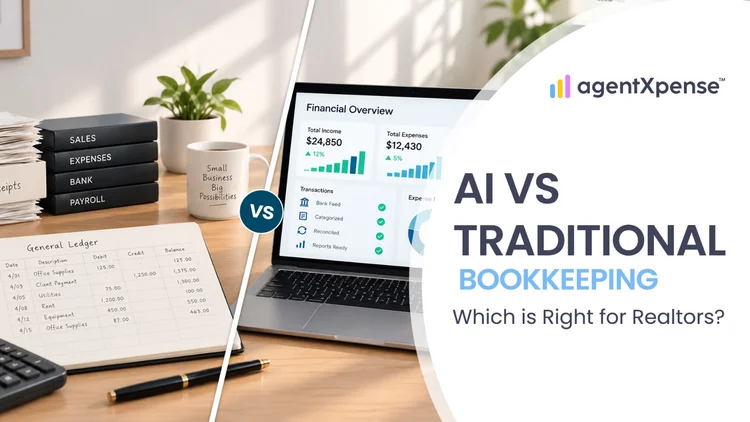
Should Realtors keep their books by hand, hire a bookkeeper or use AI? Compare the options on cost, time and accuracy before you decide.

Stop spending your 11 p.m. evenings sorting faded receipts. Learn exactly what AI bookkeeping can automate for real estate agents, where your human review still matters, and how Agent Xpense saves you hours of manual work.
2255 Dundas Street West, Suite 207 Mississauga, ON L5K 1R6
© Agent Xpense Inc. All rights reserved.